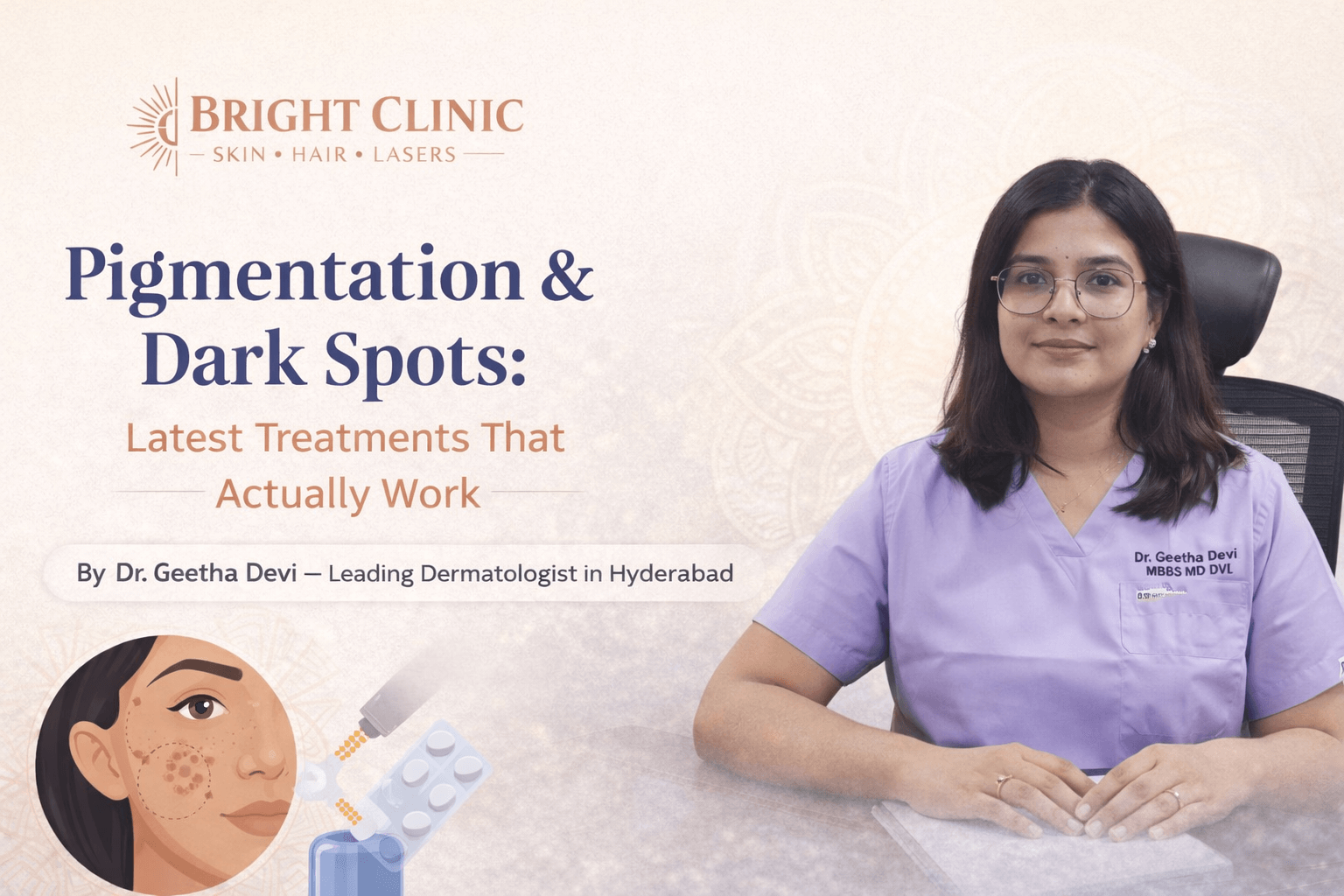
Pigmentation & Dark Spots: Latest Treatments That Actually Work
By Dr. Geetha Devi — Leading Dermatologist in Hyderabad
Pigmentation — including melasma, post-inflammatory hyperpigmentation (PIH), and sun-induced dark spots — is one of the most common and cosmetically concerning skin problems seen in dermatology clinics today. With advances in research over the past few years, we now have better, safer, and more effective treatment options than ever before. In this guide, Dr. Geetha Devi breaks down evidence-based approaches that deliver real results.
What Causes Pigmentation & Dark Spots?
Pigmentation occurs when melanin — the pigment that gives skin its color — is produced in excess and deposited unevenly in the epidermis or dermis. Common triggers include:
Sun exposure and UVA/UVB damage
Hormonal changes (pregnancy, contraceptives)
Inflammation after acne or injuries
Genetic predisposition
Medications that sensitize skin to sunlight
Identifying the type of pigmentation and its underlying cause is essential before choosing any treatment.
The Foundation: Sun Protection & Trigger Control
Nothing works without strict photoprotection. Daily, broad-spectrum sunscreen (SPF 30–50+), hats, and sun avoidance are essential.
Why it matters: UV exposure not only causes pigmentation but also worsens it and increases the risk of recurrence after treatment.
Pro tip: Reapply sunscreen every 3–4 hours, especially if outdoors.
2. First-Line Topical Treatments that Work
Topicals are the starting point for most pigmentation types. Dermatologist-supervised options include:
Hydroquinone (HQ):
Often the most effective initial agent
Used as a 2–4% formulation or as part of a triple-combination cream with retinoid and steroid
Best for short-term therapy under supervision
Retinoids:
Promote faster skin turnover
Help fade dark spots and enhance activity of other agents
Azelaic Acid, Arbutin, Kojic Acid:
Good alternatives or add-ons for sensitive skin
Lower irritation risk
Topical Tranexamic Acid (TXA):
A newer evidence-supported option for melasma and stubborn pigmentation
Works well in combination with other topicals
Oral Tranexamic Acid — A Game-Changer for Melasma
Recent dermatology research supports the effectiveness of low-dose oral tranexamic acid for stubborn melasma.
Key highlights:
Typical dermatologic dosing: about 250 mg three times daily for ~12 weeks
Shown to improve melasma severity scores in clinical trials
Well tolerated by most patients when carefully screened
Safety considerations: Because TXA can slightly increase the risk of clotting issues, a proper medical history and assessment are needed before starting therapy.
For many patients, combining topical therapy with targeted procedures speeds results — but device-based treatments must be personalized.
Fractional Lasers (Non-Ablative & Ablative):
Stimulate new skin growth and collagen
More downtime and risk if not properly calibrated
Best for mixed-depth pigmentation
Chemical Peels:
Useful for epidermal pigment
Must be conservative in darker skin tones to prevent PIH
Microneedling:
Enhances topical penetration
Good when combined with topical depigmenting agents like TXA
Combination Therapy Is Most Effective
Research consistently shows that combining treatments — sunscreen, topicals, systemic options, and procedures — yields the best outcomes.
Typical formula for success:
Stabilize with topicals first
Add oral TXA if needed and safe
Proceed with lasers/peels/microneedling
Maintain results with sunscreen and periodic topicals
6. Realistic Expectations & Maintenance
Pigmentation is chronic and prone to recurrence without ongoing care.
Expect:
Noticeable improvement over weeks to months
Need for maintenance therapy
Ongoing sun protection
Keeping expectations realistic improves satisfaction and long-term outcomes.
Who Is a Good Candidate for These Treatments?
These options are often suitable for:
People with mild-to-moderate pigmentation
Patients who have tried sunscreen and basics without success
Those willing to follow a maintenance schedule
Not every option suits every person — that’s why a tailored consultation with a dermatologist like Dr. Geetha Devi in Hyderabad ensures safety and the best possible outcome.
Why Choose Dr. Geetha Devi for Pigmentation in Hyderabad?
With years of clinical experience and research-led practice, Dr. Geetha Devi offers:
Personalized treatment plans
Latest evidence-based therapies
Advanced laser and procedural expertise
Focus on long-term results with minimal downtime
Whether you’re dealing with melasma, sun spots, or dark post-acne marks, we can help you achieve clearer, more radiant skin.
Final Thoughts
Pigmentation and dark spots can be stubborn, but you don’t have to navigate them alone. The combination of scientifically proven topicals, careful systemic therapy, and targeted procedures — anchored by strict sun protection — gives many patients real, lasting improvement.
Ready for a consultation with Dr. Geetha Devi? Contact us on +91 8341136066 Reach out today to start a plan that’s tailored to your skin and goals.